FIBERMAXXING
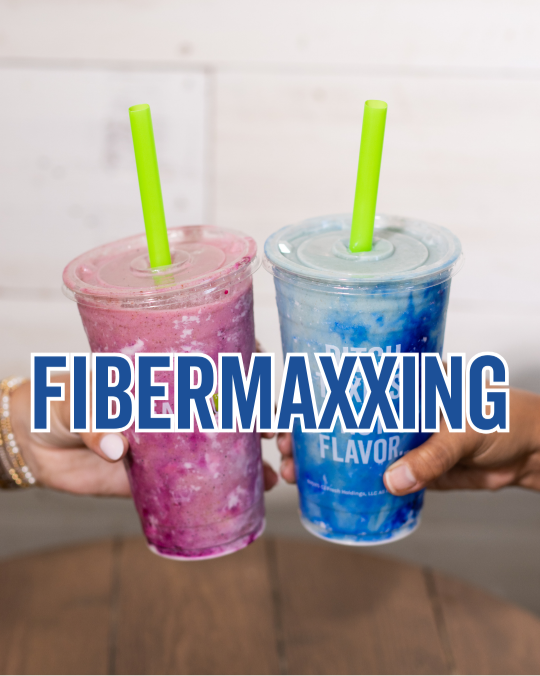
We’ve all had those days… feeling sluggish, bloated, or constantly hungry no matter how much we eat. While it’s easy to blame it on stress or a busy schedule, one often-overlooked culprit is a lack of fiber. Despite being essential for overall wellness, fiber is something most people aren’t getting enough of (1). It’s not just about keeping things “regular”… fiber helps to support heart health, gut health, weight management, and can even help to stabilize blood sugar levels (1). The good news? Adding more fiber to your day is easier than you might think, especially with the help of places like Clean Juice!
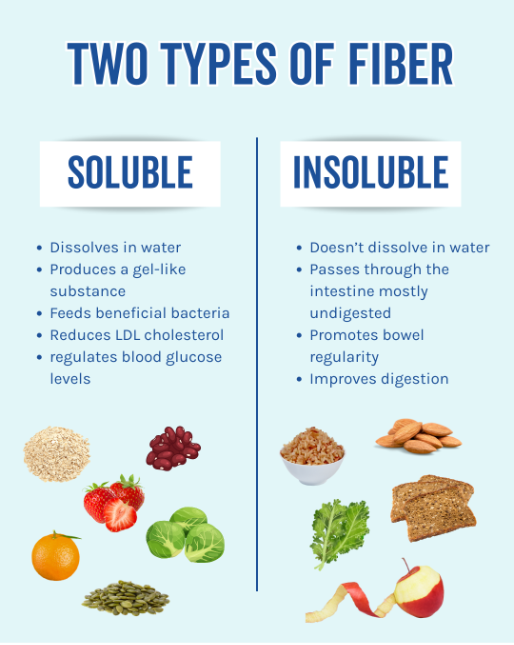
Fiber is a type of carbohydrate found in plant-based foods that your body can’t fully digest (2). Unlike other carbs that break down into sugars, fiber passes through your digestive system mostly intact, helping to keep things moving and supporting gut health (3). There are two main types: soluble fiber, and insoluble fiber.
Soluble fiber is a type of dietary fiber that dissolves in water and forms a gel-like substance in the digestive tract. This unique property helps slow down digestion, which can help to stabilize blood sugar levels and lower cholesterol, particularly LDL cholesterol (1). Soluble fiber also helps to support gut health by feeding beneficial gut bacteria, acting as a prebiotic (3). You can find it in foods like oats, apples, citrus fruits, carrots, peas, flaxseeds, and legumes such as beans and lentils (1). Including more soluble fiber in your diet can support heart health, improve digestion, and help you feel fuller longer, making it a powerful ally kicking cravings, snacking, and supporting overall wellness (1).
Insoluble fiber is the type of dietary fiber that does not dissolve in water (1). Instead, it adds bulk to stool and helps food move more efficiently through the digestive system, helping to promote regularity and ideally helping to prevent constipation (3). While it doesn’t directly impact cholesterol or blood sugar like soluble fiber, its role in supporting a healthy, functioning gut is essential. Insoluble fiber is found in foods like whole wheat, brown rice, nuts, seeds, and the skins of fruits and vegetables (1). It acts almost like a broom for your digestive tract, keeping things flowing and helping to reduce the risk of inflammatory bowel disorders (3). For optimal health, it’s important to include both insoluble and soluble fiber sources in your daily diet (2).
For people eating the Standard American Diet (SAD), a dietary pattern characterized by high consumption of processed foods, refined grains, high-fat dairy, and red and processed meats, and low consumption of fruits, vegetables, and whole grains, most will consume around 10 to 15 grams of fiber daily (2). That may sound like a lot, but in reality, it’s only half of what we actually need. The recommended daily intake of fiber, according to the FDA, is categorized by age and gender (1):
- Women under 50: 25 to 28 grams per day
- Men under 50: 31 to 34 grams per day
- Women 51 and older: 22 grams per day
- Men 51 and older: 28 grams per day
There’s often confusion about which foods are actually rich in fiber, so let’s clear that up. Fiber is found in plant-based foods like fruits, vegetables, nuts, seeds, beans, lentils, and whole grains. In contrast, animal proteins such as chicken, fish, beef, seafood, and eggs contain no fiber at all. Processed foods and baked goods – like chips, pastries, and snack bars – typically contain only 1 to 2 grams of fiber per serving, making them a poor source, especially since there are other ingredients in those food items such as sugar and seed oils (2). While some fiber may be present in the typical American diet, it often comes from less nutritious sources. To truly boost your fiber intake, the best choice is whole, plant-based foods.
To put this into perspective, one cup of raspberries has 8 grams of fiber, one cup of carrots contains 3.6 grams of fiber, one tablespoon of chia seeds contains 4 grams of fiber, and half a cup of beans contains about 7 grams of fiber. On the other hand, many highly processed foods fall short when it comes to fiber. One cup of corn flake cereal contains 1 gram of fiber, one cup of potato chips has about 1.5 grams of fiber, and one slice of white bread contains about 0.8 grams of fiber (4).
The highest fiber options will be fruits, veggies, nuts, and seeds: These foods are higher in fiber than many other foods because fiber comes from the cell walls of plants, which these foods naturally contain in abundance. The thick plant cell structures provide both soluble and insoluble fiber, which our bodies can’t fully digest but are essential for digestion and overall health (1). Additionally, these foods are typically less processed and usually consumed in their most natural form, preserving their natural fiber content. Nuts and seeds are especially fiber-dense due to their fibrous outer coatings.
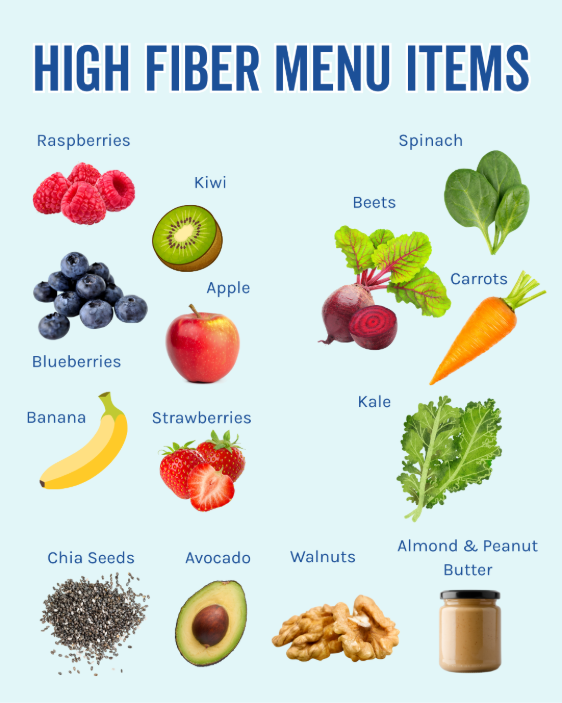
If you’re struggling to get your fiber intake up, kick cravings to the curbs, and support digestive health — “fibermaxxing” may be your new best friend. It’s not an official medical term, but the objective of fibermaxxing is to ensure you eat enough fiber on a daily basis. It’s all about building meals and snacks around fiber-rich foods like fruits, veggies, beans, lentils, seeds, nuts, and whole grains. The goal of fibermaxxing is to meet or exceed the recommended daily fiber intake while not “overdoing it.” A simple way to do this is by adding in more ingredients instead of taking some away. Some people achieve this by adding chia and flax seeds to smoothies and yogurt bowls, topping a salad with roasted chickpeas, or adding avocado to scrambled eggs. At Clean Juice some of our smoothies include up to 12 grams of fiber – For women and men under 50, that’s 48% to 32% of the recommended daily intake in just one drink!
Here is the ranking of our fibermaxxed smoothie blends by the amount of fiber in a 16 oz smoothie based on their stated ingredients on the menu:
Fiber Content (12g):
- Peanut Butter One
- Razzy One
- Sweetheart One
Fiber Content (9g):
- Mango N’ Cream One
- Mighty Mocha One (with hemp protein)
- Recharge One (with hemp protein)
- Pink Punch One
Fiber Content (8g):
- Recovery One
- Youthful One
- Chocolate One
- Evergreen One (with hemp protein)
- Feel Good One
Fiber Content (7g):
- Island One
- Electric One (with hemp protein)
Smoothies are an easy and delicious way to boost your fiber intake because they allow you to blend whole fruits, vegetables, nuts, seeds (and even grains if you desire) into one convenient drink. Unlike juices that remove most of the fiber by straining out the pulp, smoothies keep all the edible parts of the ingredients intact, preserving their natural fiber content. Adding ingredients like berries, spinach, chia seeds, almond butter, or oats can significantly increase the fiber content of your smoothie, making them a great option for busy people who struggle to eat enough fiber-rich foods throughout the day (4). Plus, blending makes it easier to digest and absorb nutrients, helping you feel fuller longer and supporting better digestion. By swapping out low-fiber processed snacks for fiber-packed smoothies, you can effortlessly begin fibermaxxing your diet and enjoy the health benefits that come with it.
In addition to getting your fiber fix at Clean Juice, there are some additional ways to get fibermaxxing! Snack on fruits, vegetables, nuts, seeds, and dips such as hummus and guacamole. At main meals, try to also incorporate two sources of fiber. This could be 1 cup of berries and half an avocado at breakfast time, carrot sticks and a handful of almonds at lunch time, and a serving of broccoli and brown rice at dinner. Keep the skin on your fruits and vegetables when eating them, especially if eating organic, but always remember to give them a wash! Lastly, swap refined grains from whole grains by switching from white bread, pasta, and rice for their whole grain versions like whole wheat bread, brown rice, quinoa, or barley. Be mindful that increasing fiber should be done slowly! Adding too much fiber into a body that is not used to it may cause digestive upset such as bloating, gas and even constipation (2). Remember, there can be too much of a good thing.
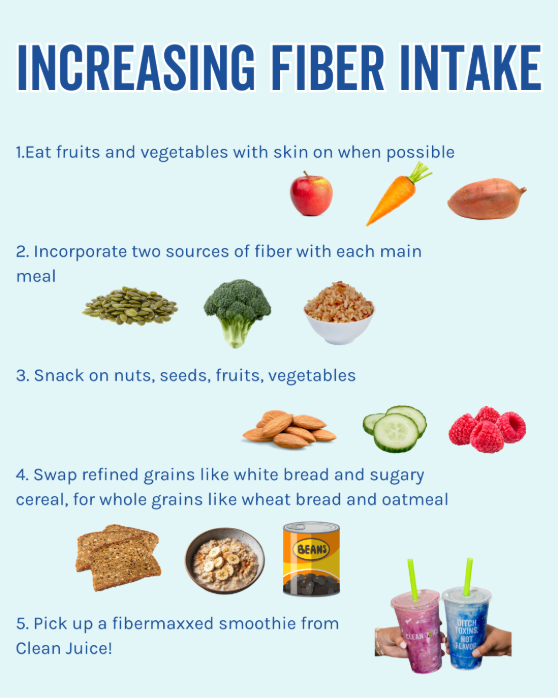
Increasing your fiber intake doesn’t have to be complicated! It’s all about making simple, consistent choices that add up over time. Whether through whole foods, snacks, or even a daily smoothie from Clean Juice, boosting fiber helps to support so many aspects of our health and overall well-being (1). Remember, both soluble and insoluble fibers play important roles in keeping your body running smoothly (1). Start small, stay mindful, and enjoy the benefits of a fibermaxxed diet.
Sources
- Akbar A, Shreenath AP. High Fiber Diet. [Updated 2023 May 1]. In: StatPearls [Internet]. Treasure Island (FL): StatPearls Publishing; 2025 Jan-. Available from: https://www.ncbi.nlm.nih.gov/books/NBK559033/
- U.S. Department of Health and Human Services. (2024, June 17). Rough up your diet. National Institutes of Health. https://newsinhealth.nih.gov/2010/08/rough-up-your-diet
- Fu J, Zheng Y, Gao Y, Xu W. Dietary Fiber Intake and Gut Microbiota in Human Health. Microorganisms. 2022 Dec 18;10(12):2507. doi: 10.3390/microorganisms10122507. PMID: 36557760; PMCID: PMC9787832.
Current dietary guidelines. Food Sources of Dietary Fiber | Dietary Guidelines for Americans. (n.d.). https://www.dietaryguidelines.gov/resources/2020-2025-dietary-guidelines-online-materials/food-sources-select-nutrients/food-sources-fiber